Veneers
Veneers no one notices.
Designed for your face, preserving your teeth.
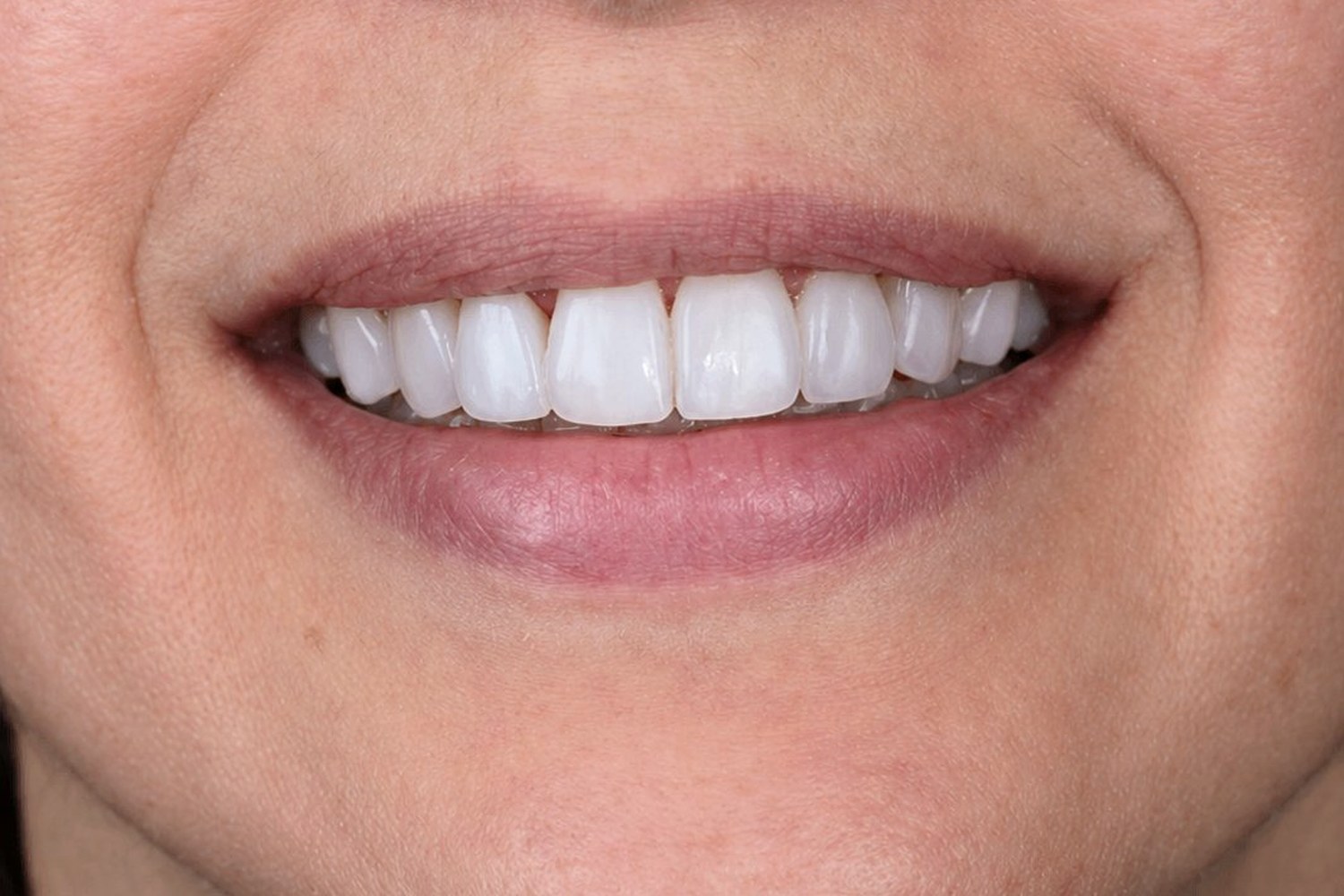
Designed for your face, preserving your teeth.
Teeth that are short, uneven, spaced, or shaped in a way that does not suit your face.
Stains or shades that whitening does not solve, such as some fluorosis or darkened teeth.
Stained fillings, old crowns with a dark margin, or veneers done years ago that you no longer like.
You are looking for an aesthetic change without reducing healthy teeth, or with as little as possible.
Every veneer is designed on screen first, tried in your mouth, and only then made. The question is not how many teeth to change, but what to change, what to preserve, and why. Sometimes the answer is porcelain; sometimes composite; sometimes nothing at all.
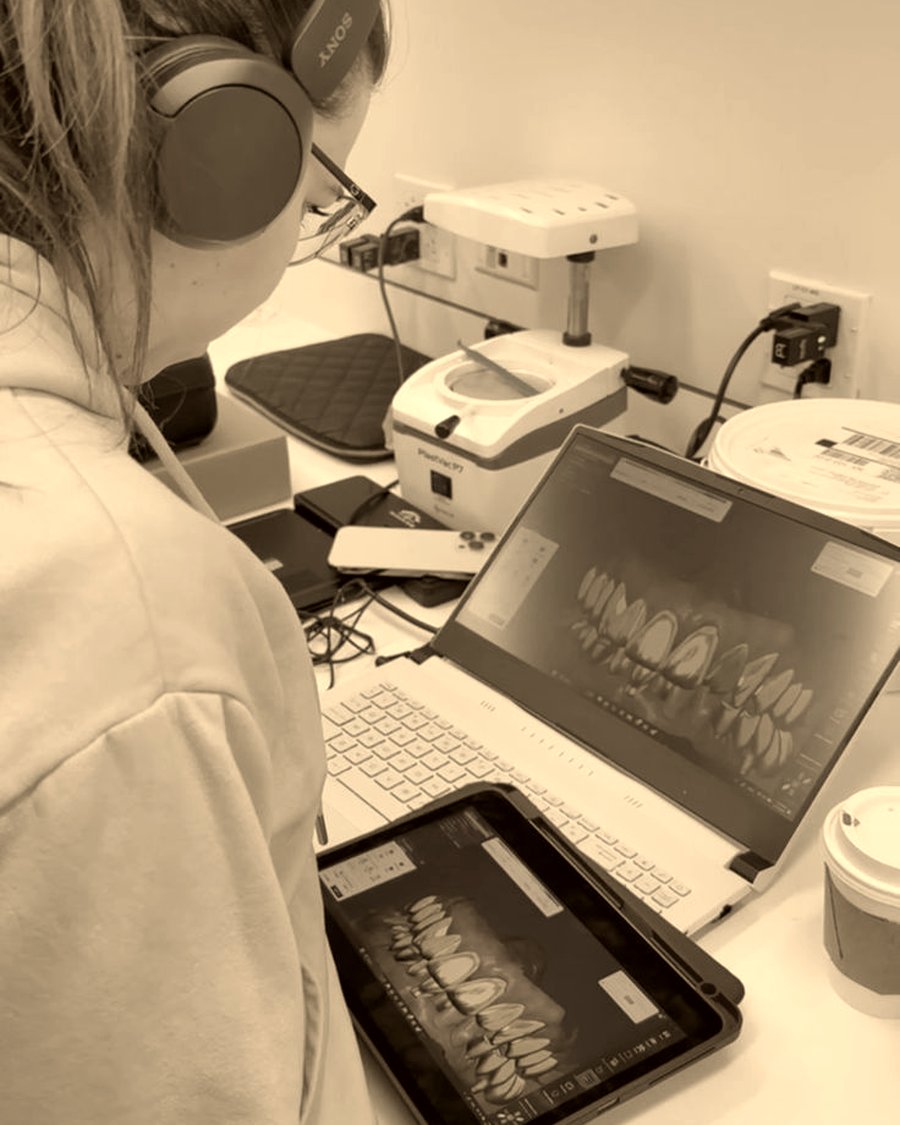
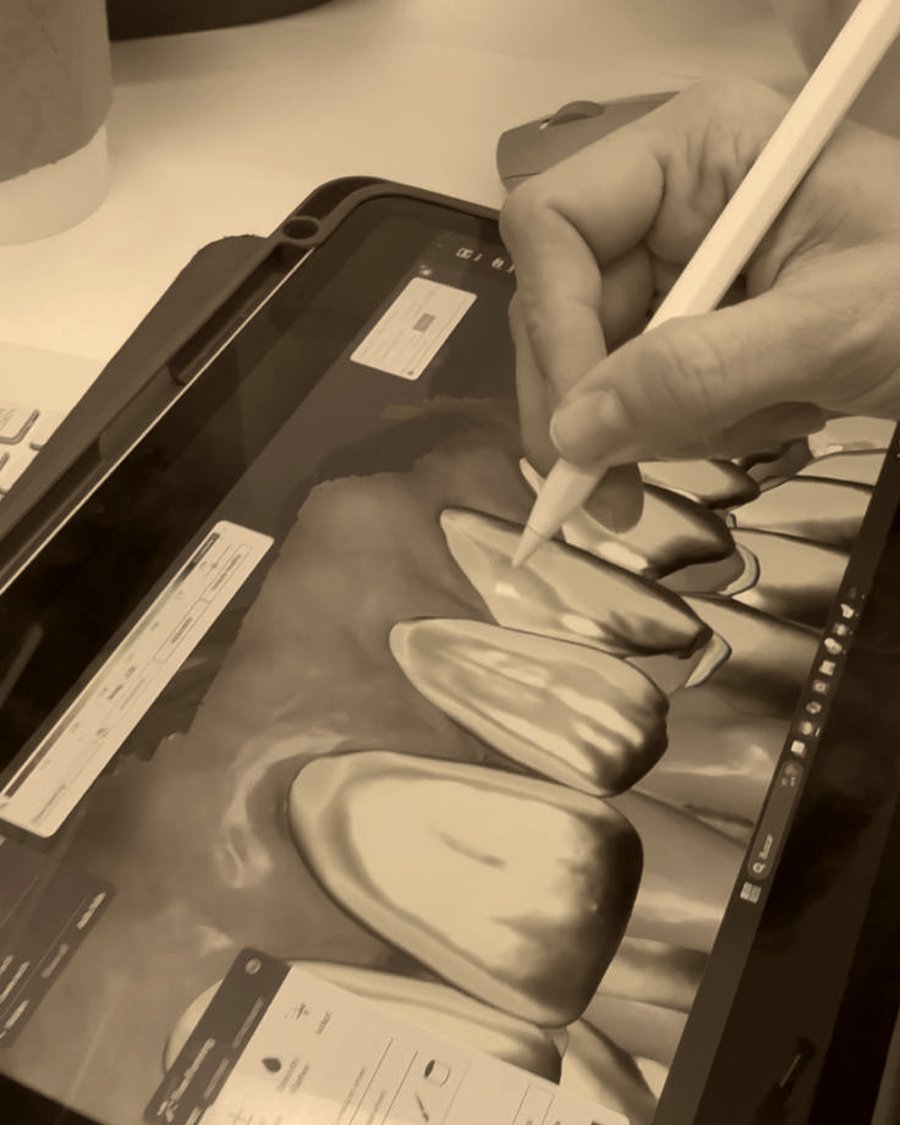
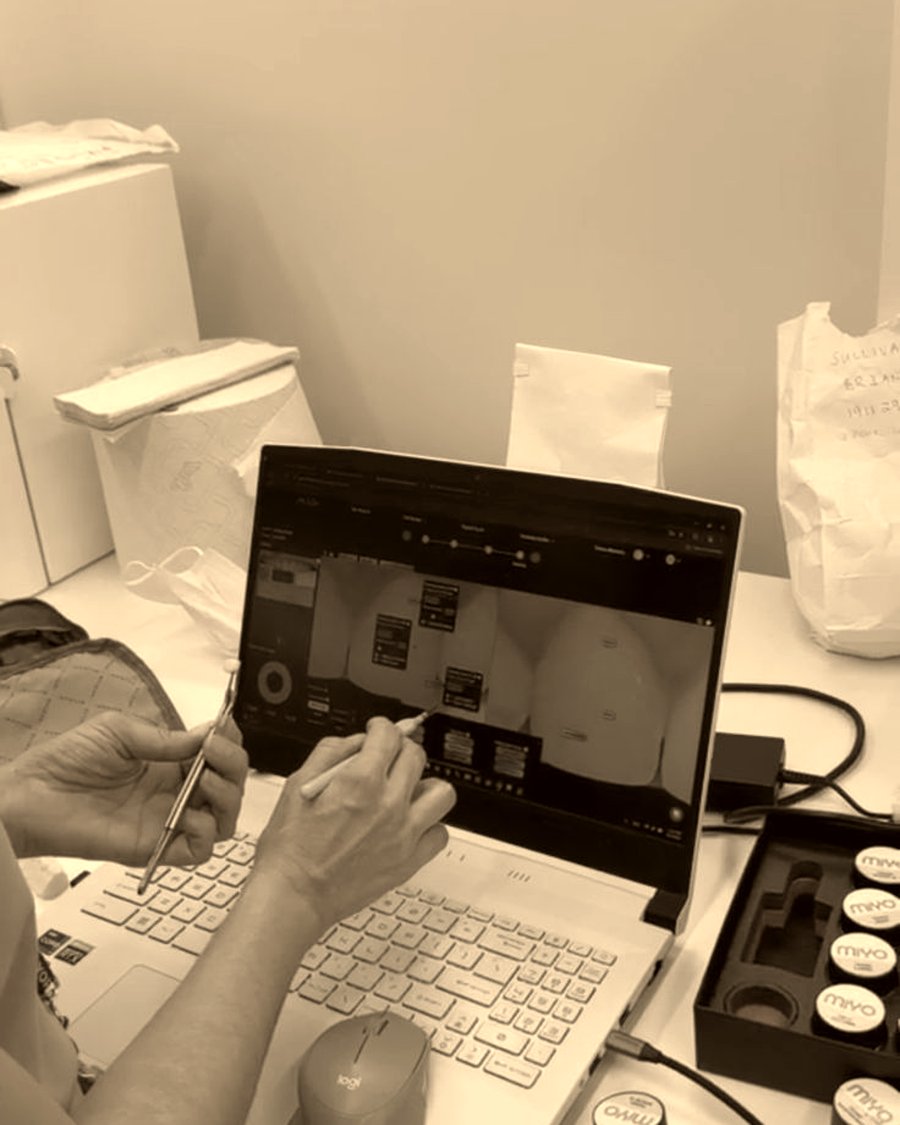
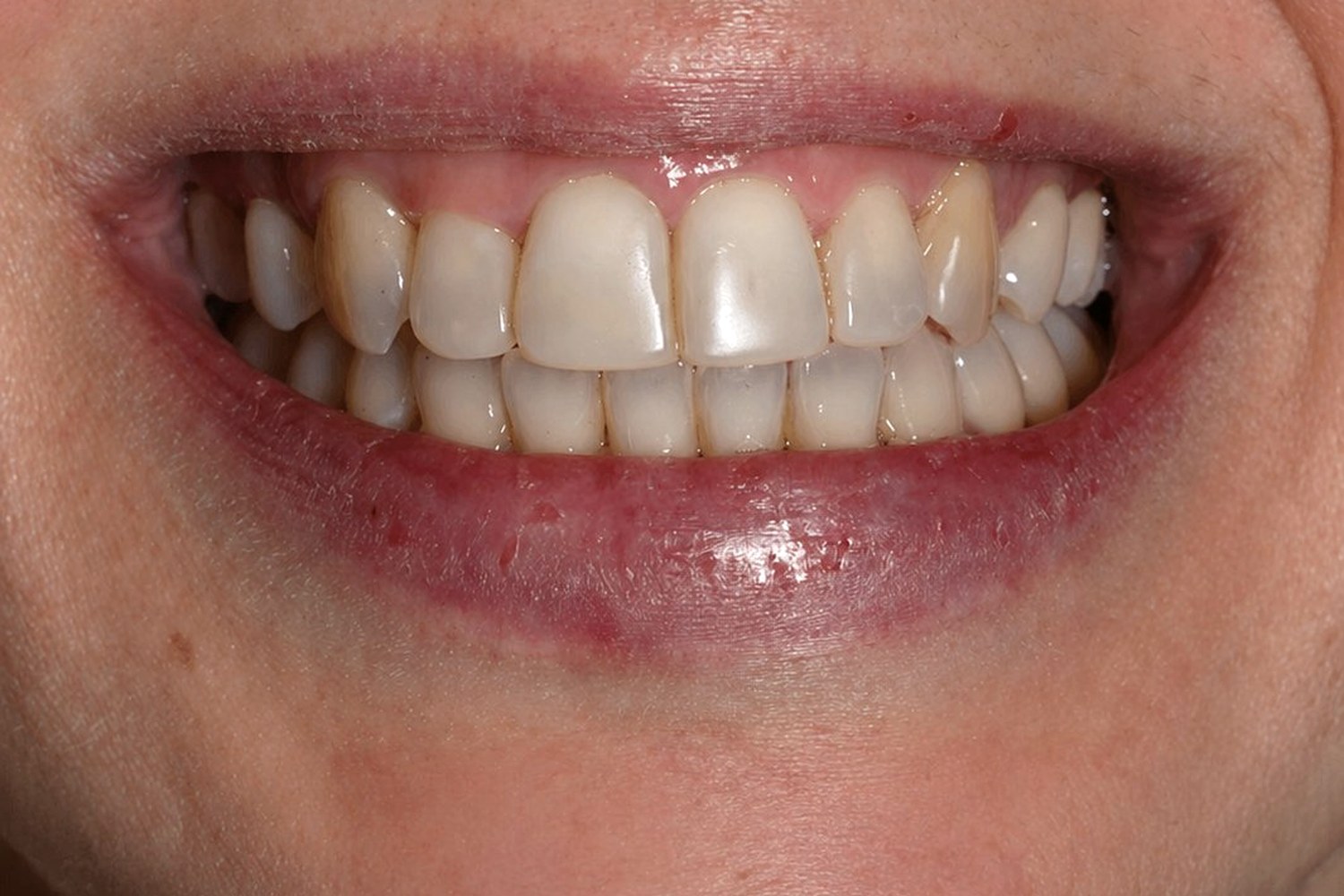
0.3 mm prepless veneers. Old composite restorations replaced by ultra-thin porcelain, designed and milled in the clinic, on healthy enamel.
Conoid lateral incisors after orthodontics. The usual path was six veneers. We chose a digital design executed in composite, with no tooth preparation.
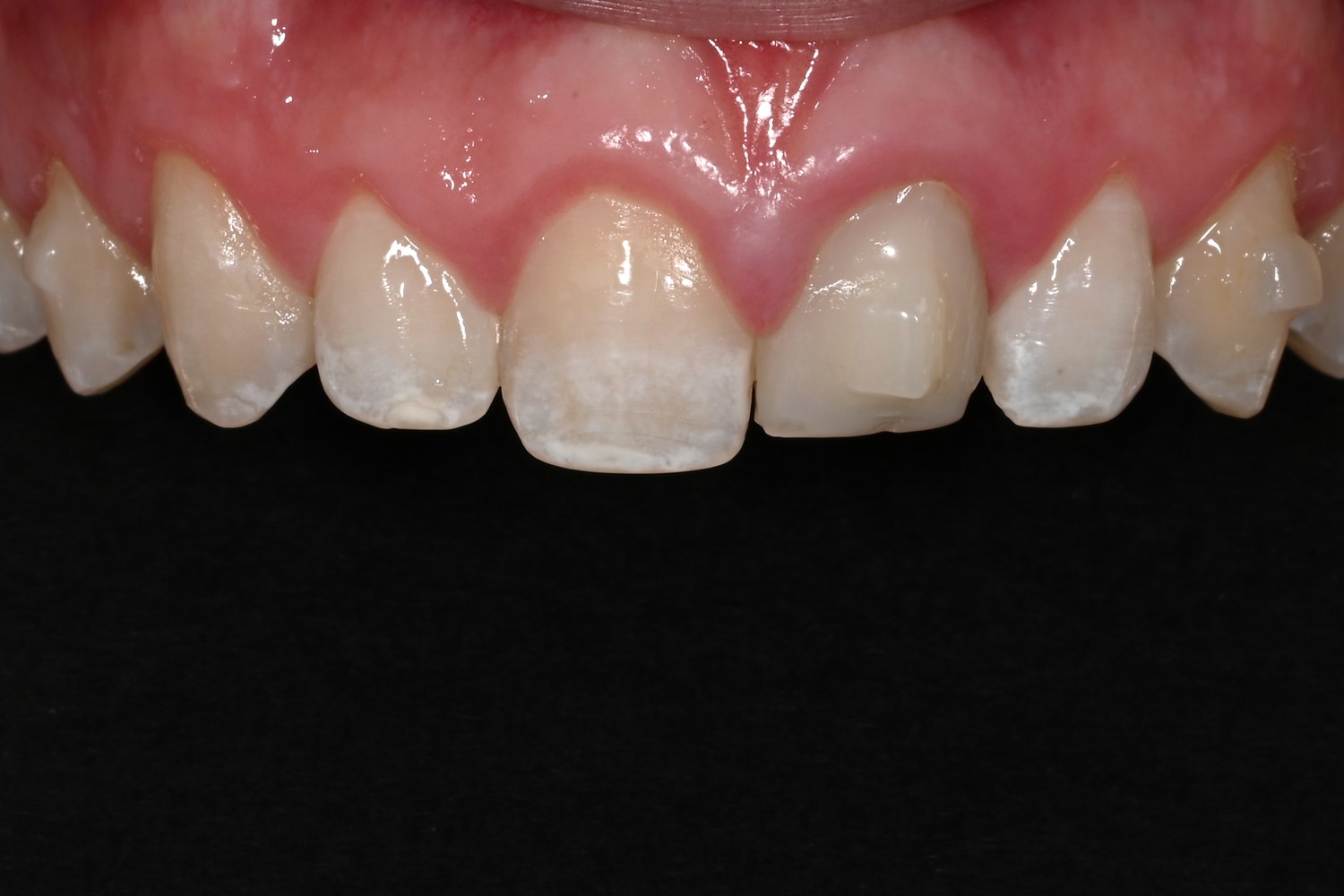
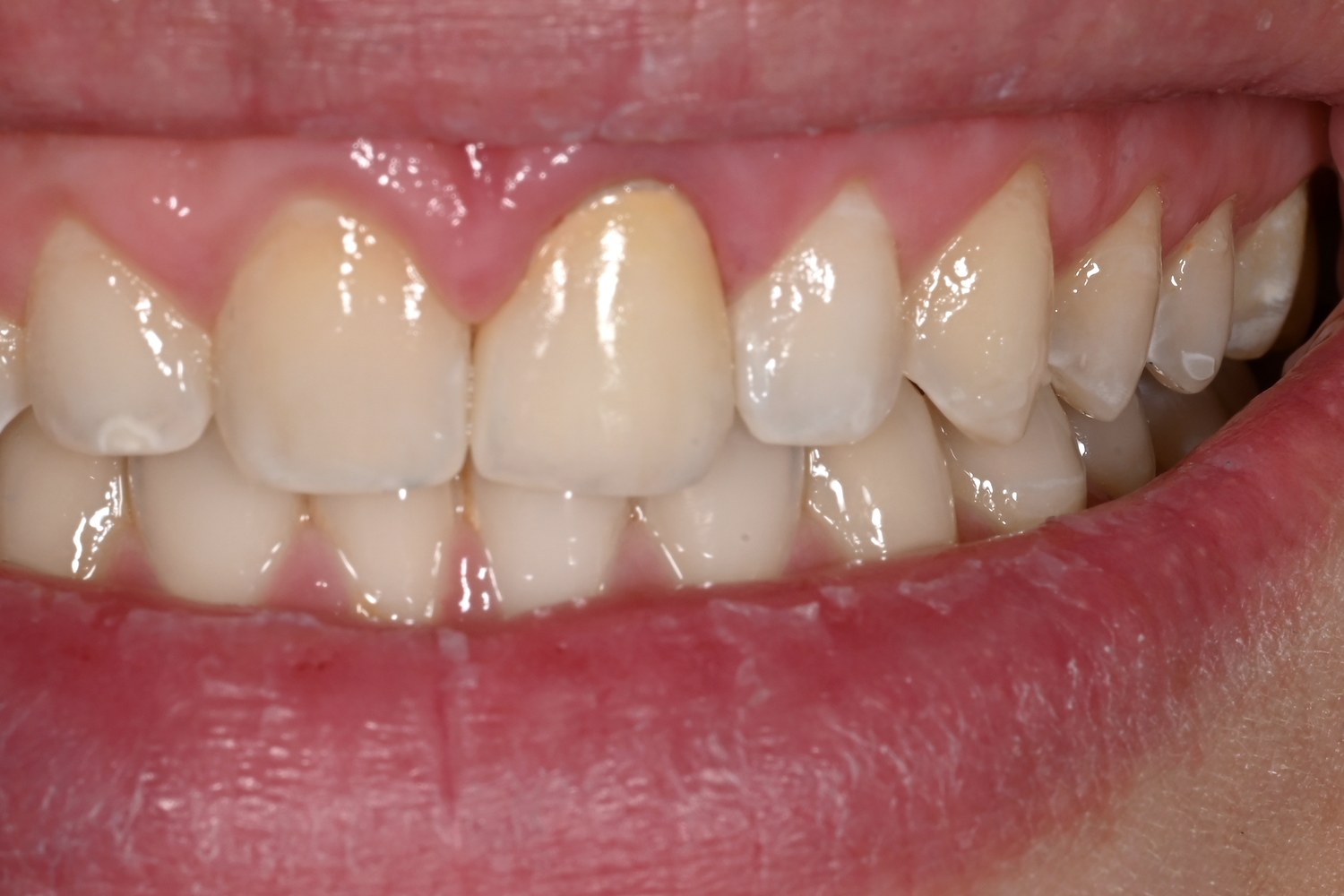
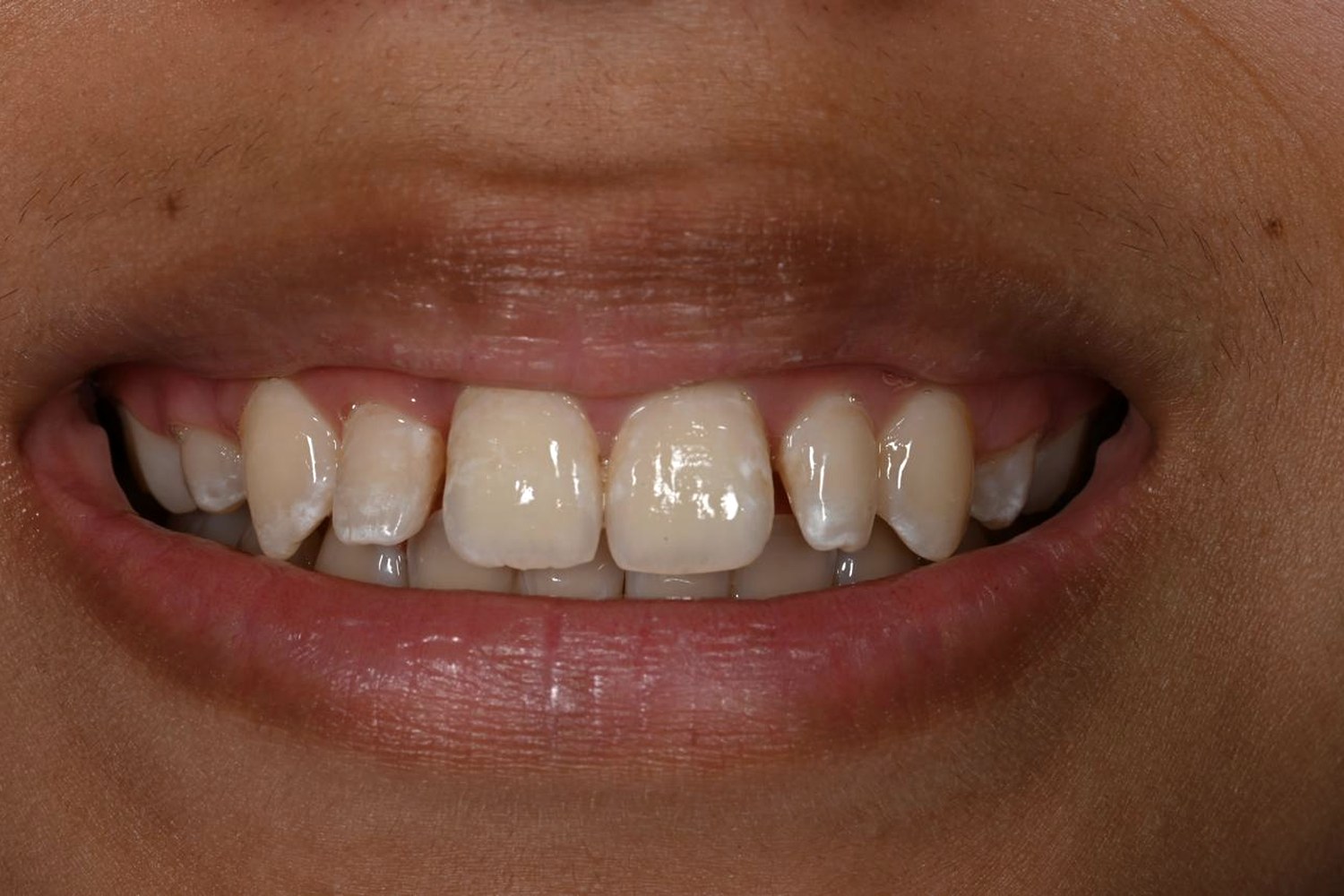
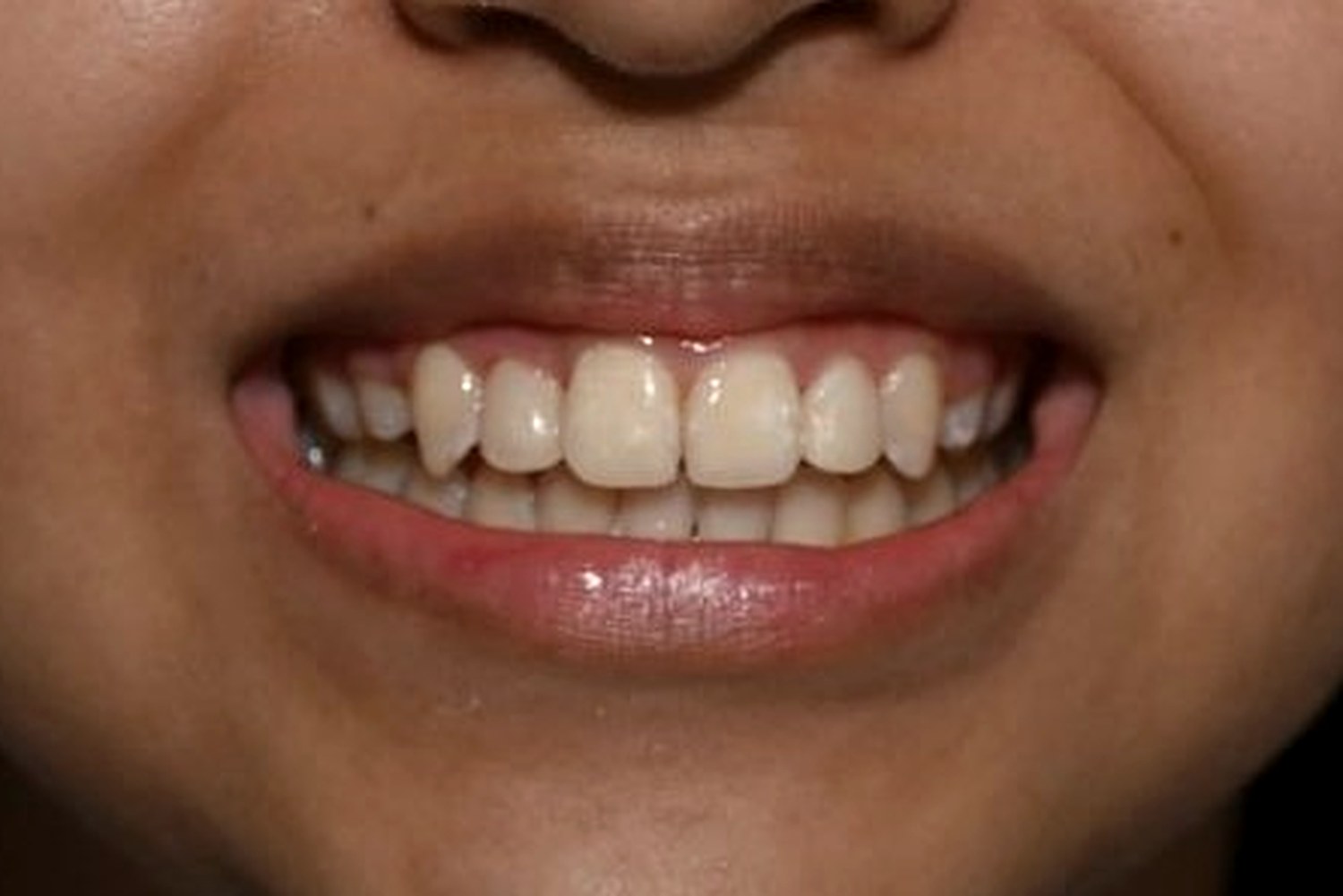
Trauma and fluorosis. The lost tooth was recreated by digitally mirroring its twin; the fluorosis was treated with resin infiltration (ICON). No veneers, no crowns.
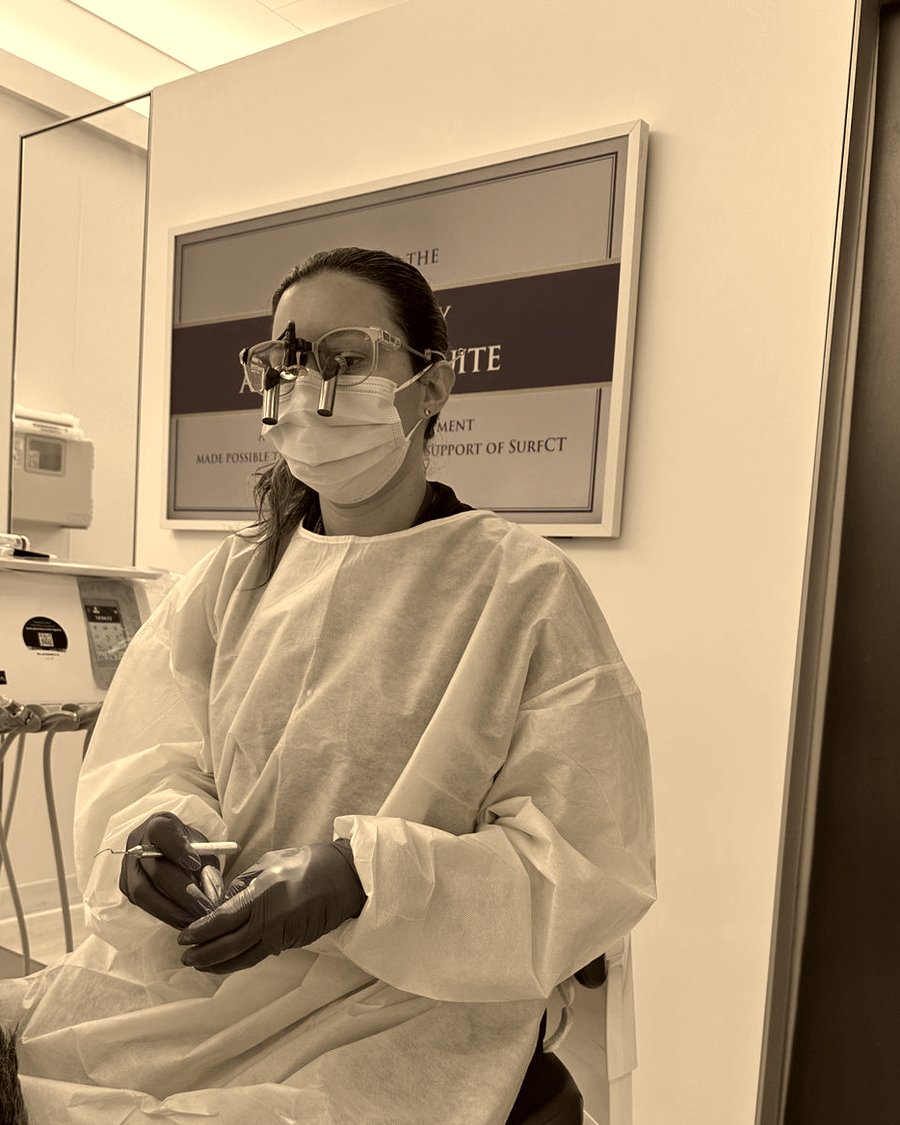
Before I was a dentist, I was a graphic designer: a smile is a composition of proportion, light and intention.
It depends on the case. When the shape and position of the teeth allow it, veneers can be done with no reduction or with minimal reduction limited to enamel. If the shape or color needs to change a lot, sometimes more is needed. We decide with the digital design and the in-mouth trial, before touching a tooth.
Well indicated and cared for — hygiene, check-ups and a night guard if you clench — porcelain veneers last many years. Composite veneers need more maintenance: periodic polishing and touch-ups. In the consultation I explain what to expect in your case.
The goal is that they don’t. They are designed with the shape, color and texture that suit your teeth and your face, and finished by hand. Before deciding, you see them in your mouth with a mock-up.
It does not rule out veneers, but it has to be planned: the material and the bite design are chosen with that in mind, and a night guard is prescribed. See also TMJ and bruxism.
Usually: a consultation with scan and photographs, a visit to try the design in your mouth, and the placement visit. The exact number depends on the case and is written in the plan.
Yes. First we assess the teeth and gums under the current veneers, then plan the replacement with the same digital workflow.
Porcelain keeps its color and shine better over the years; composite is more conservative and easier to repair. Often the best option combines techniques. We decide together, with the design in front of us.
A scan, photographs and a conversation about what you would like to change — and what you would not. With that we build the design, and you see it before deciding anything.