Clear aligners
Aligners designed and made in the clinic.
Straighter teeth without braces, with a plan you see before you start.

Straighter teeth without braces, with a plan you see before you start.
Overlapping or rotated teeth that are hard to clean and change the smile.
Spaces between teeth that you want to close.
Teeth that moved again years after orthodontic treatment.
Moving teeth into place so the aesthetic treatment can be more conservative.
We have made our own aligners since 2018: we plan them and produce them ourselves, with no intermediaries. They are changed every 15 days, and at each check-up we confirm that the movement follows the plan.
3D intraoral scan (no impression paste), photographs and an assessment of teeth, gums and bite.
We design the movement tooth by tooth and show you the expected result and the duration.
You receive your first aligners, with instructions for wear and care.
Aligners changed every 15 days and check-ups to adjust the plan if needed, through retention.
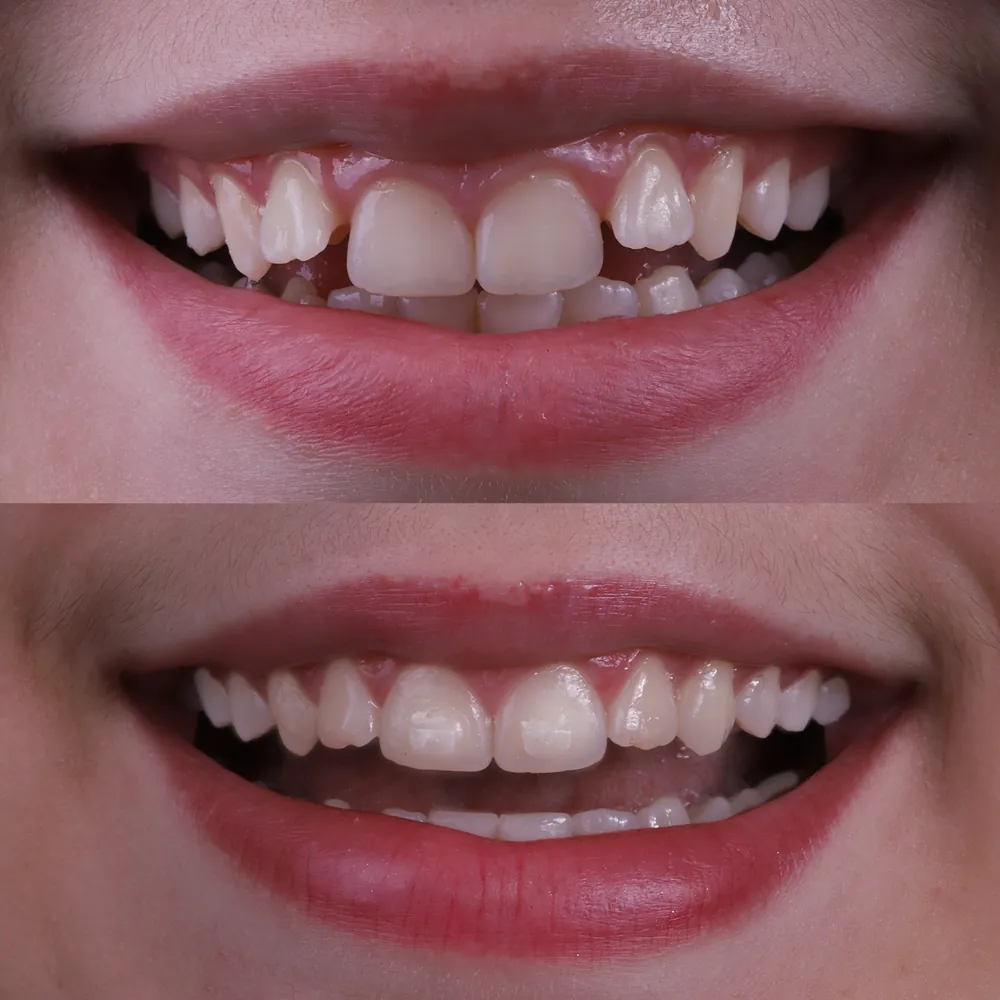
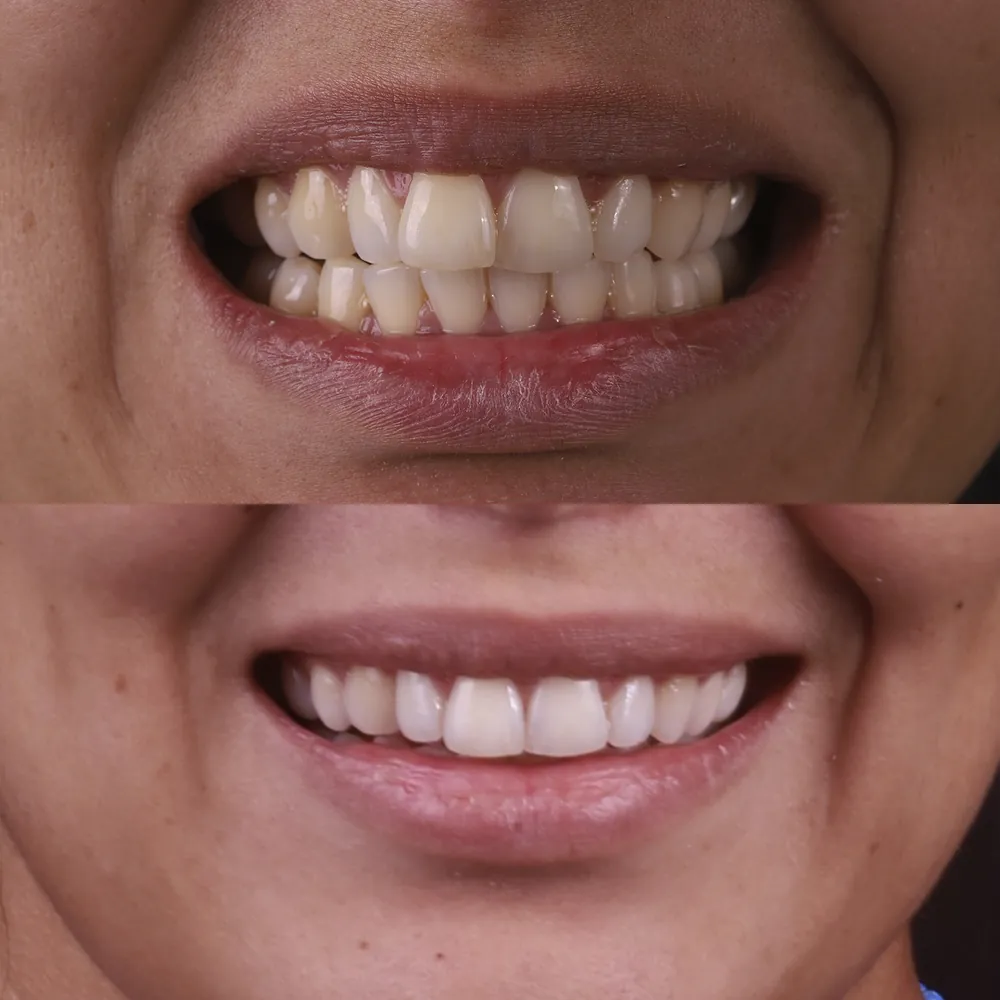
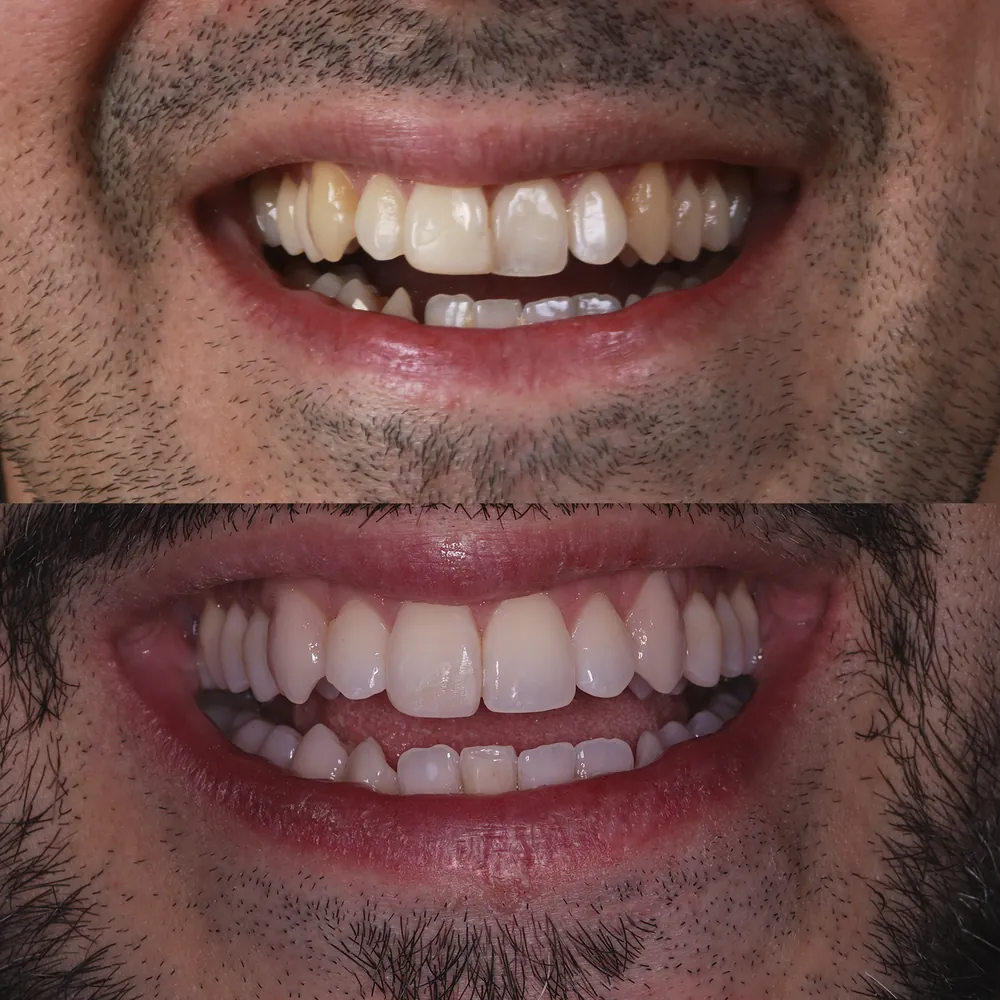
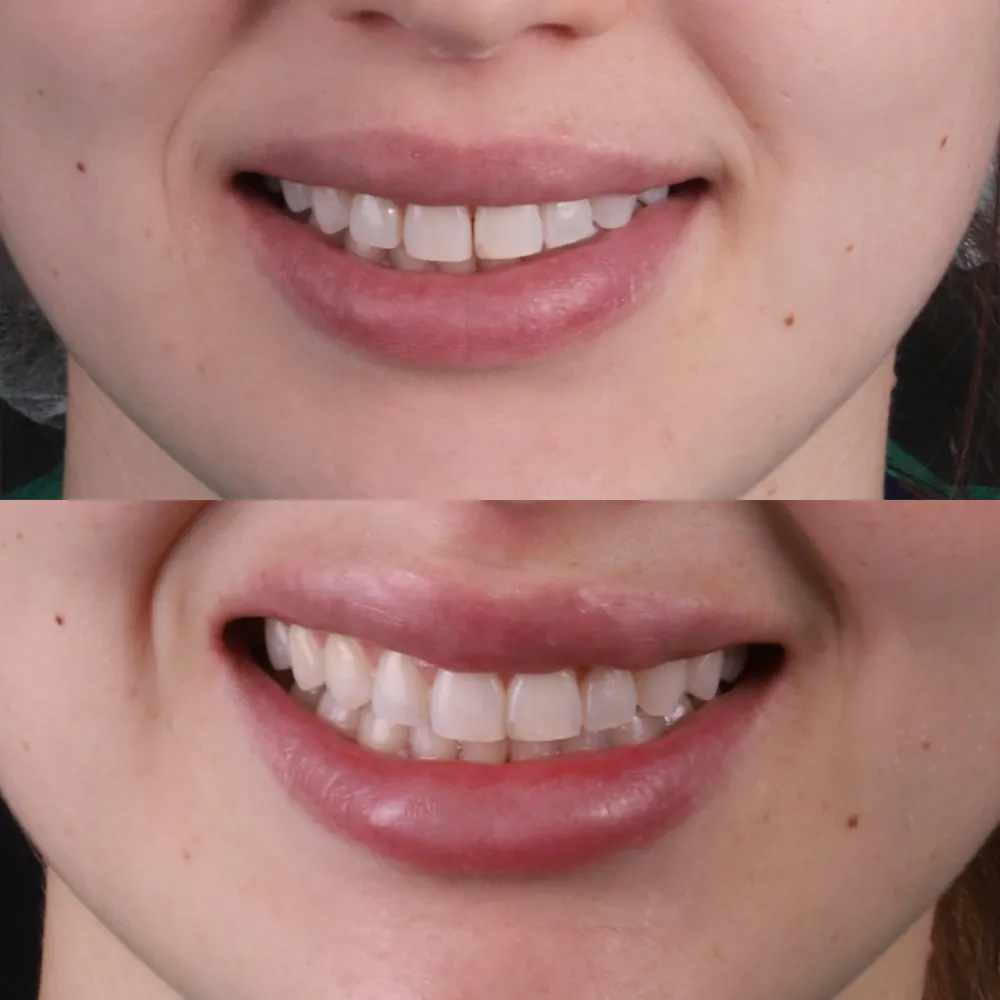
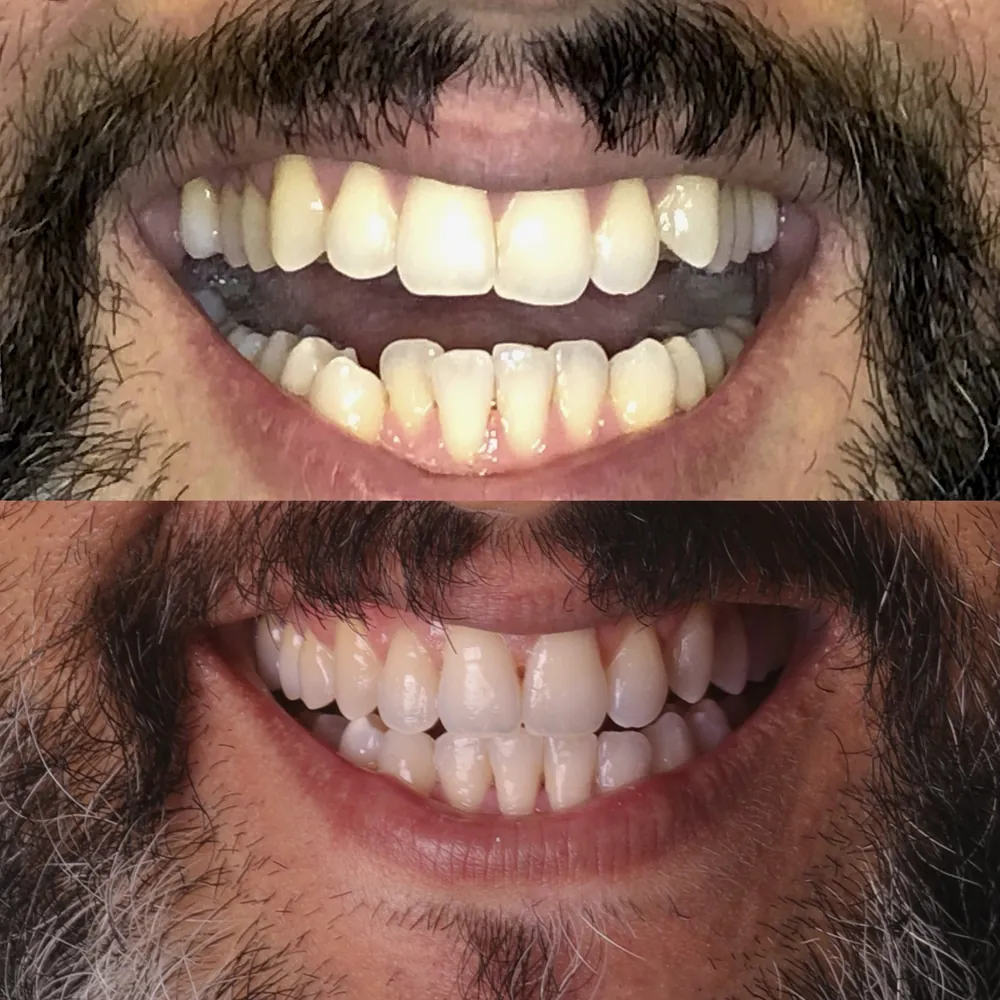
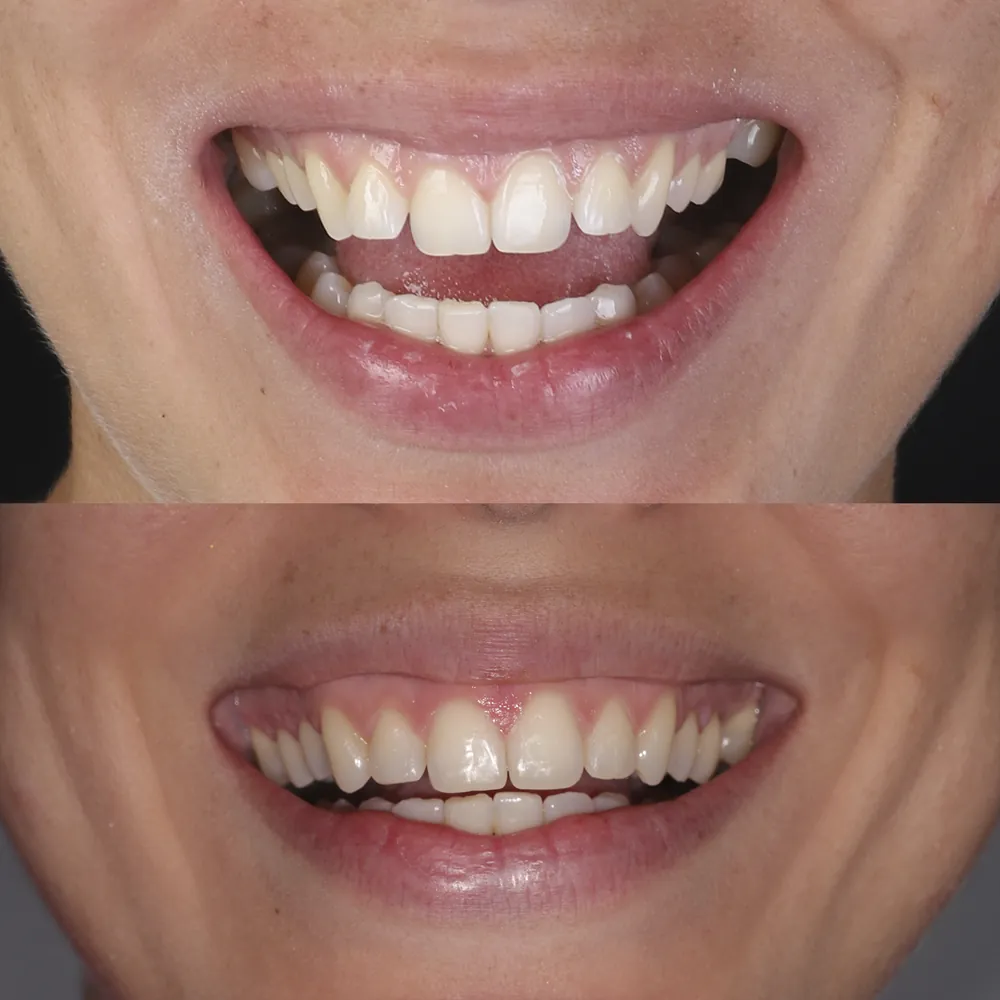
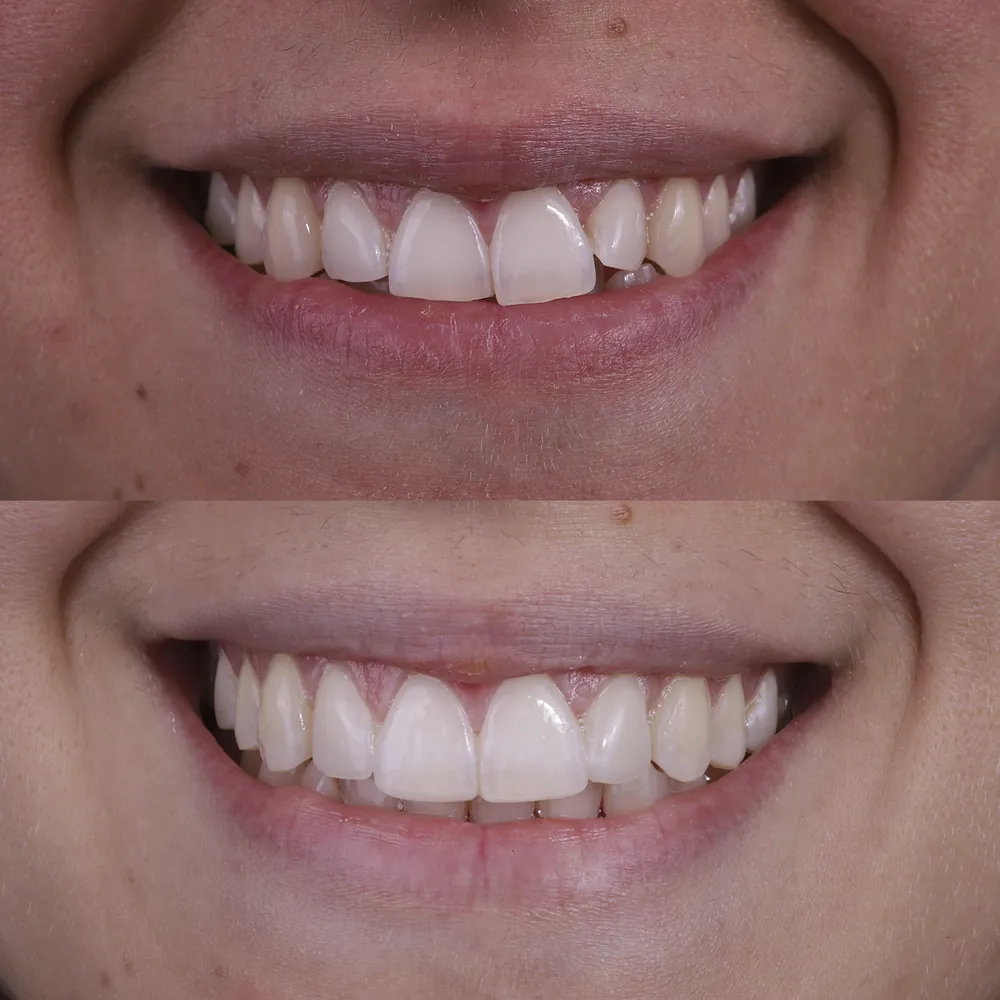
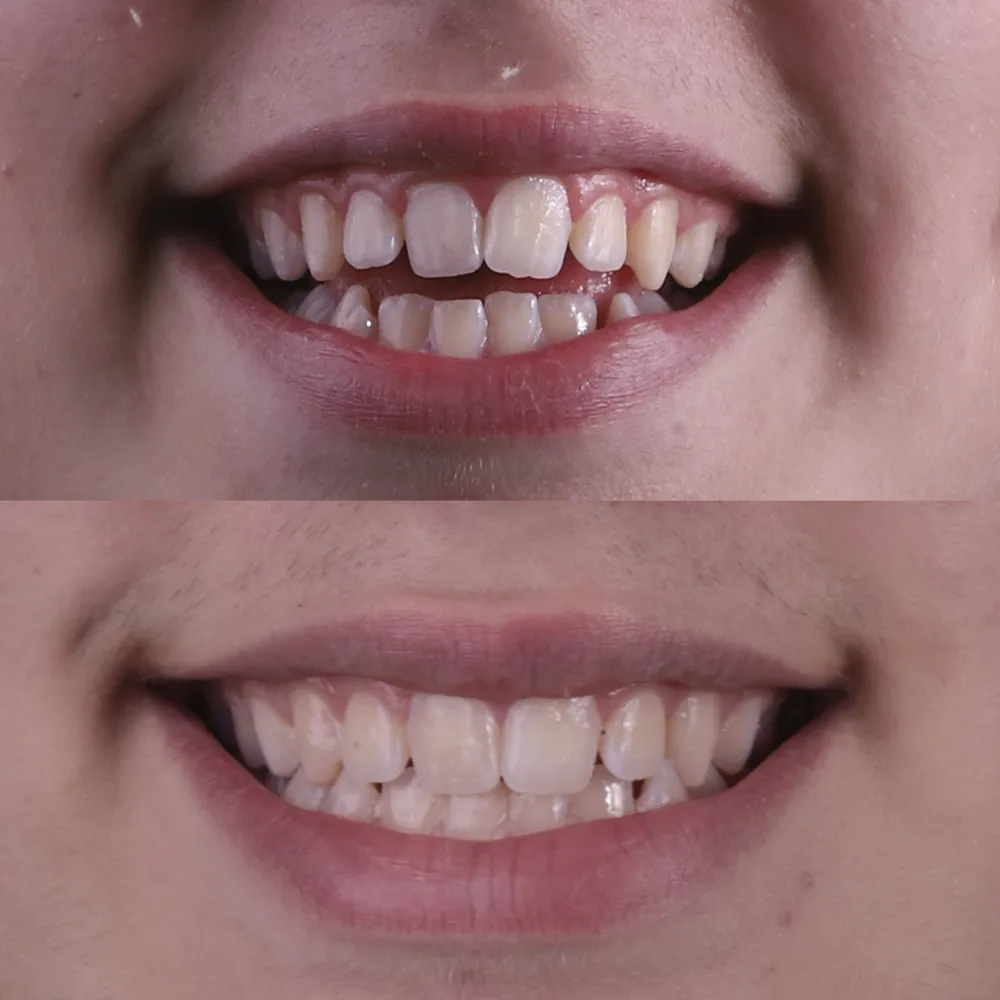
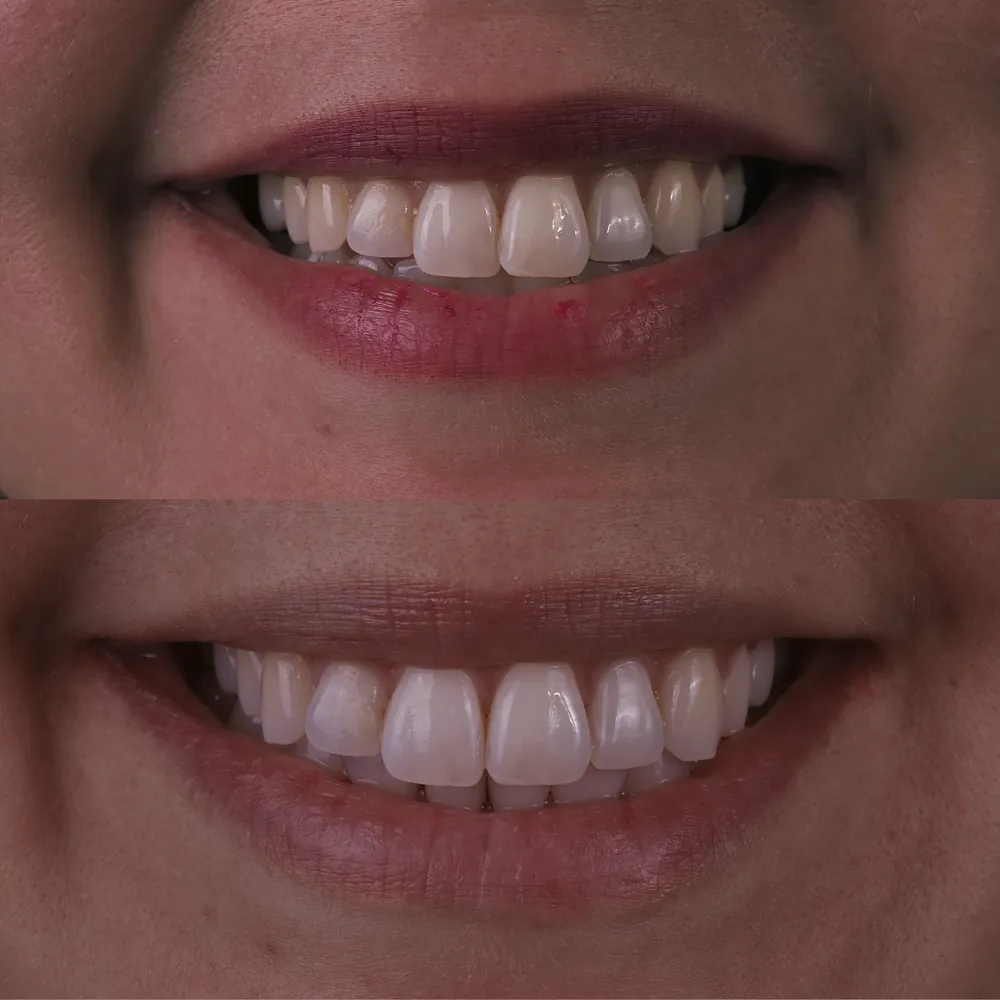
Patients treated with our aligners. Top, before; bottom, after. Published with their consent.
Very little: they are clear and thin. In some cases small tooth-colored bumps are bonded to help the movement, and they are barely visible.
About 22 hours a day. You take them out only to eat, drink anything other than water, and brush. Wearing them less means the treatment won’t progress as planned.
It depends on the case: from a few months for mild corrections to more than a year for complex cases. You know before starting, from the digital plan.
Aligners are clear and come out for eating and brushing, which makes hygiene easier. In return, they depend on you wearing them for the full time indicated. Some complex movements may need another technique; I will tell you at the evaluation.
Teeth tend to move back, so there is always a retention stage: a fixed retainer behind the teeth, a night-time retainer, or both. It is part of the treatment.
When you switch to a new aligner you feel pressure for a day or two — a sign they are working. It should not be intense pain; if it is, let us know.
A scan and a conversation are enough to know whether aligners are right for you, how long they take, and how your smile would look.